Propagation · Entry 01.4
Appleton's proof
Edward Appleton measured the reflecting layer experimentally and took the 1947 Nobel Prize for it.
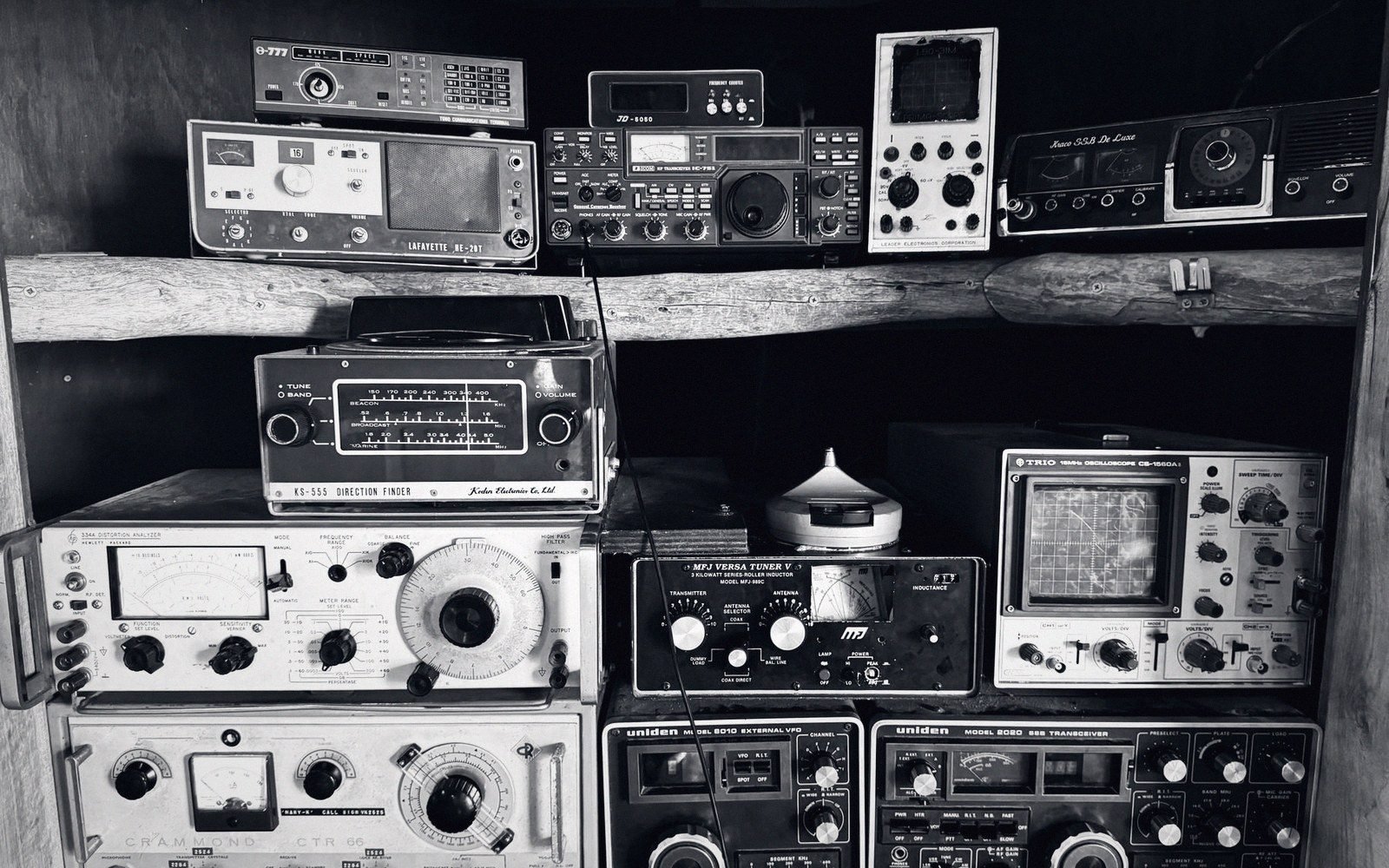
How a frequency sweep across a BBC transmitter settled a two-decade-old argument about what the sky was actually doing to radio waves.
The measurement that named the ionosphere
Oliver Heaviside and Arthur Kennelly had each proposed, independently, in 1902, that a conducting layer in the upper atmosphere was bending Marconi's transatlantic signals back to earth. The idea was plausible, even necessary to explain the observations — but it was still a hypothesis. Nobody had measured the layer directly: its height, its behaviour under different conditions, or whether it was even a single thing.
Chronology
- 1902Heaviside and Kennelly each independently propose a conducting atmospheric layer
- 1924–25Appleton and Barnett conduct the Cambridge–Oxford frequency-sweep experiment using the BBC Bournemouth transmitter
- 1947Appleton awarded the Nobel Prize in Physics
Edward Appleton, working with Miles Barnett at Cambridge in 1924–25, designed an experiment elegant enough to settle the question. The tool was the BBC's Bournemouth transmitter. Appleton arranged for the carrier frequency to be swept slowly up and down through a small range, then used a receiver at Oxford — roughly 100 kilometres north — to watch what arrived. If a reflected wave existed, it would travel a longer path than the direct ground wave and arrive slightly out of phase. As the frequency changed, that phase difference would cycle, producing a series of interference maxima and minima at the receiver. The spacing of those fringes could be converted directly into the height of the reflecting layer — no assumptions about conductivity, no guesswork.
The fringes appeared. The layer was real, sitting at approximately 100 kilometres altitude. Appleton subsequently distinguished a second, higher layer — the one that matters most for long-distance skywave propagation — and named it the F layer; what he had first detected became the E layer. A lower, daylight-only absorbing region was later identified as the D layer, which accounts for much of the difference between daytime and night-time medium-wave behaviour.
Appleton spent the following decades mapping how the layers shifted with the sun, with the seasons and with the eleven-year solar cycle, establishing that the reflecting height and electron density were not fixed but continuously variable. That variability is why a transmitter serving a predictable daytime ground-wave area can become an unpredictable long-distance skywave source after dark, and why the interference geometry changes night by night.
The Nobel Committee awarded Appleton the Physics prize in 1947, citing specifically the discovery and the measurement method — not a theory, but an experiment with a broadcast transmitter and a careful receiver at the far end of a known path. The technique he used, sending a signal over a controlled path and reading what comes back, is the direct ancestor of the ionospheric sounders — ionosondes — that monitor the layers in real time today and feed the frequency-planning tables that medium- and shortwave engineers still work from.