Modulation · Entry 05.3
Digital carriage
What actually changed when transmission went digital, and what did not.
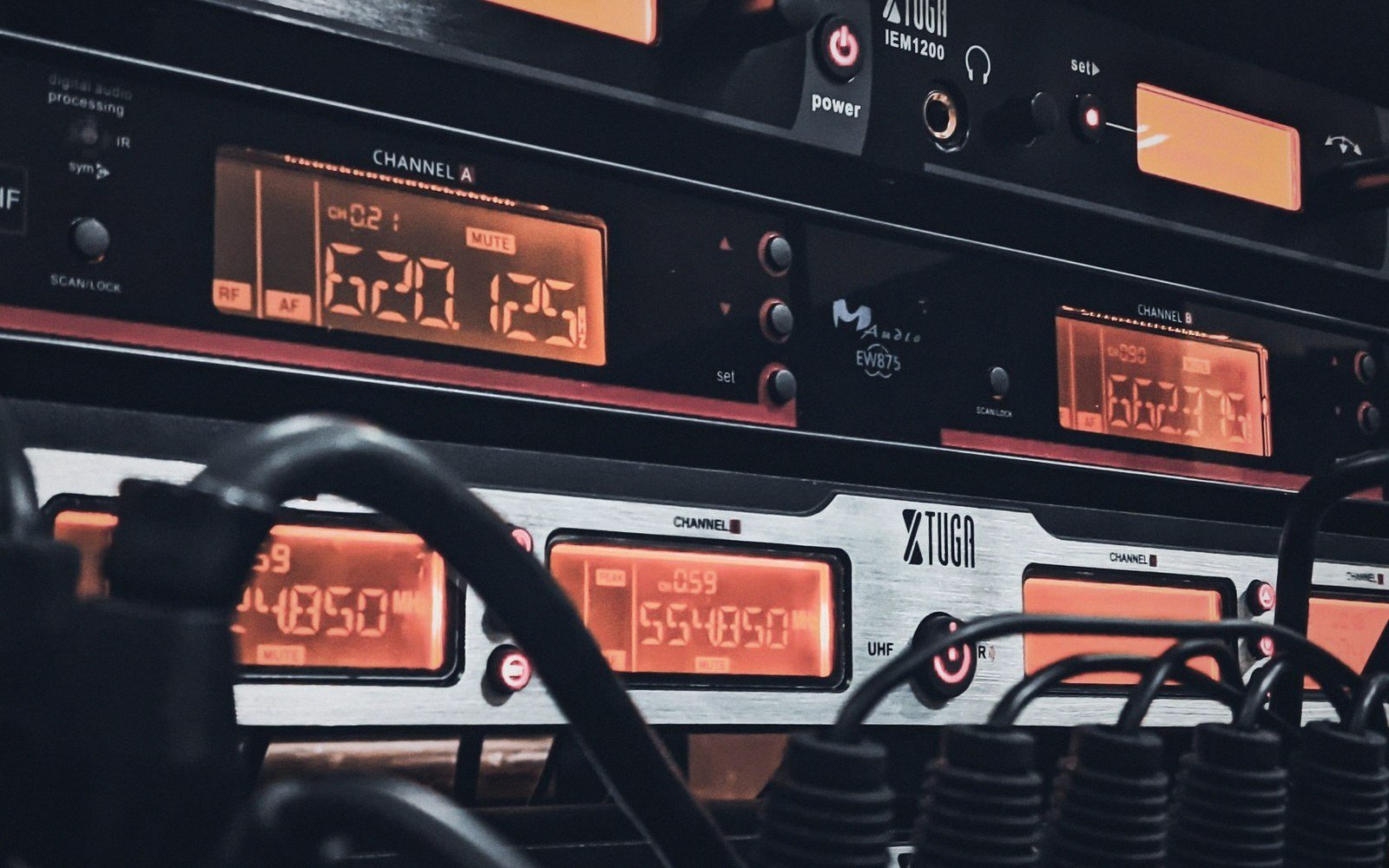
The carrier wave didn't change. What rides on it did.
What Stayed, What Shifted
A broadcast transmitter running HD Radio or DAB still does exactly what a 1930s transmitter did: it takes an RF carrier and varies it in a way that encodes information. The physics of propagation — ground wave hugging the soil, skywave bouncing off the ionosphere at night, signal loss over distance — is indifferent to whether the modulation is analogue or digital. The tower, the transmission line, the antenna pattern: all the same hardware, all the same constraints.
| What | The consequence |
|---|---|
| Analogue AM | degrades gradually; intelligible past its reliable boundary |
| Digital (HD Radio / DAB) | full-quality up to a threshold, then silent; the "digital cliff" |
| Forward error correction (FEC) | redundancy baked into the bitstream; more FEC = more robustness, less audio capacity |
What changed is what the modulation encodes and how. In amplitude modulation, the envelope of the carrier directly mirrors the audio waveform — a linear, continuous relationship. In a digital system, the carrier is instead varied to carry a stream of bits, typically using a scheme like OFDM (Orthogonal Frequency Division Multiplexing), which spreads those bits across dozens or hundreds of subcarriers simultaneously. Each subcarrier carries only a small slice of the data rate, which is why a narrow null or a fade at one frequency doesn't collapse the whole signal.
That architectural difference is the core exchange digital carriage makes: it trades graceful degradation for a cliff edge. An analogue AM signal weakens predictably — more noise, more hiss, but intelligible a long way past the reliable-coverage boundary. A digital signal decodes perfectly right up to a threshold, then stops decoding at all. Engineers call this the "digital cliff." Planners have to decide how much margin to build into coverage predictions to keep listeners on the right side of it.
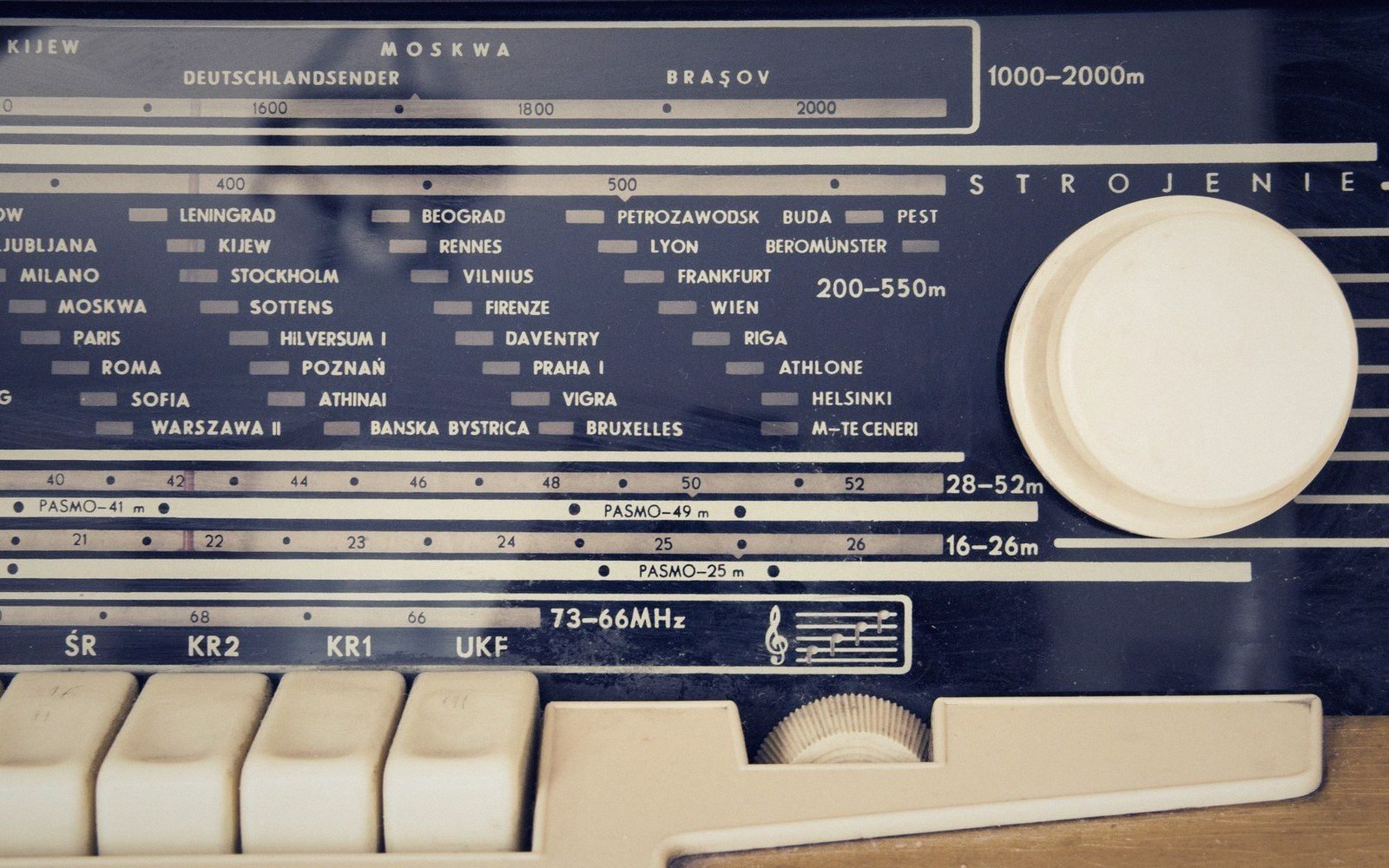
Error correction sits at the heart of why digital works as well as it does near that threshold. The bitstream carries deliberate redundancy — forward error correction (FEC) — so that a receiver can reconstruct data even when some bits arrive corrupted. The stronger the FEC, the more robust the signal, but also the lower the net audio data rate, because more of the transmitted capacity is carrying repair information rather than programme.
The Federal Communications Commission authorised HD Radio (the IBOC — In-Band On-Channel — system developed by iBiquity, now Xperi) on AM and FM in the United States in the early 2000s. The DAB/DAB+ standards, developed through the Eureka 147 project and standardised by ETSI, are promoted by WorldDMB and used across much of Europe and beyond. Neither standard changed what the ionosphere does to a signal at night, or what a poorly conducting soil does to ground-wave reach. The medium is still radio. The message is now packaged differently.