Day and Night · Entry 02.2
Clear channels
Frequencies protected for long-distance night coverage, and WLW Cincinnati running 500 kW in the 1930s before it was stopped.
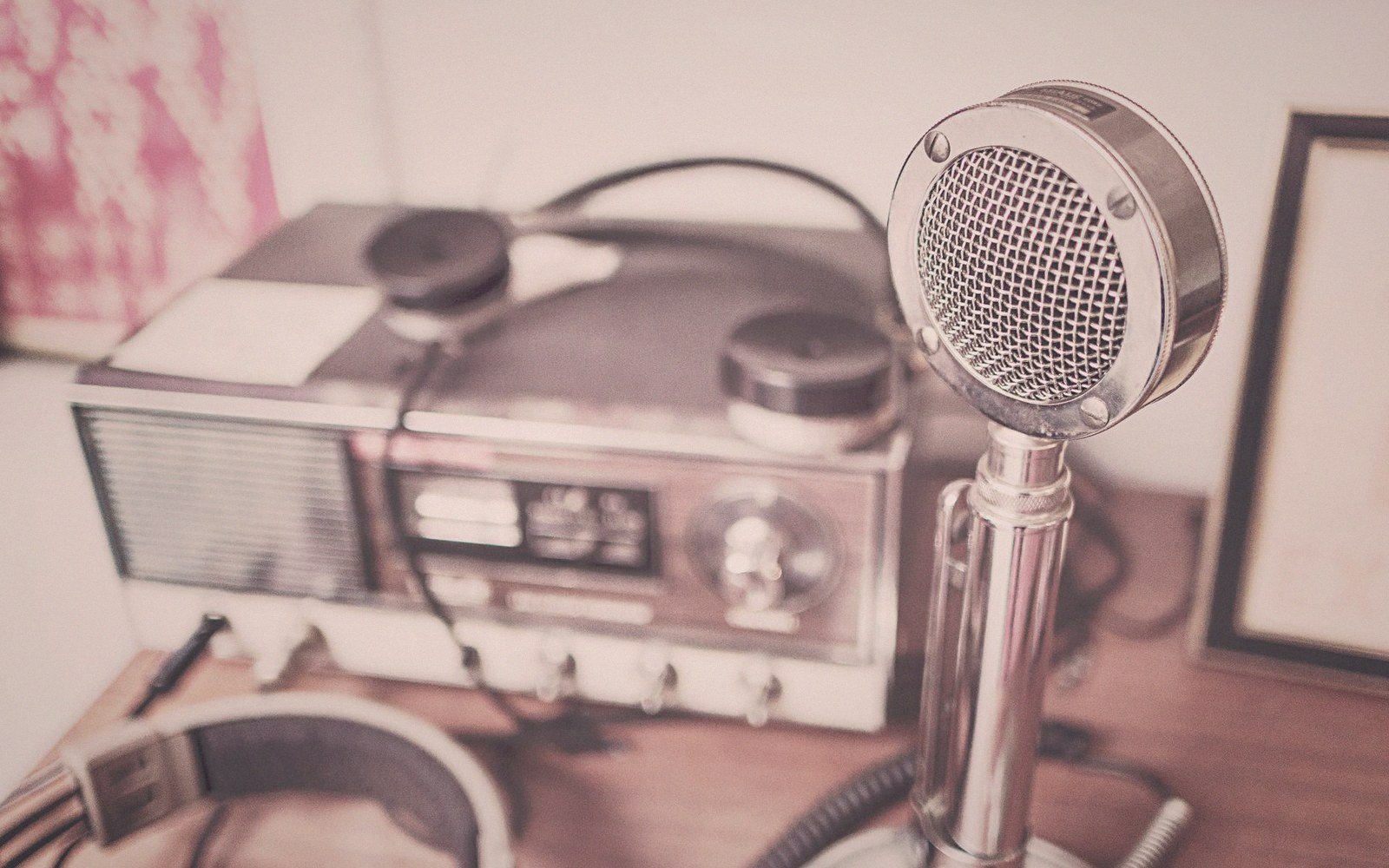
The frequency that belongs to one station after dark
A clear channel is an AM broadcast frequency assigned to a dominant station with the explicit intent of protecting its night signal across a continent. The logic is simple: at night, the D layer collapses, skywave propagation returns, and a powerful transmitter on an uncluttered frequency can be heard thousands of kilometres from the tower. A clear channel designation is the regulatory attempt to make that coverage reliable rather than chaotic.
The Federal Communications Commission codified the hierarchy in the United States during the 1930s. At the top sat Class A, or clear-channel, stations — one dominant station per frequency, or at most a handful widely separated and power-limited, with the dominant station carrying full power through the night. Below them, regional and local stations were assigned frequencies where they shared time or reduced power after sunset. The International Telecommunication Union negotiated parallel arrangements internationally, so that the dominant stations of one country did not obliterate the protected coverage of another's.
Chronology
- 1934FCC authorises WLW Cincinnati to operate at 500 kW experimentally
- 1939FCC orders WLW to reduce to 50 kW; experimental licence not renewed
- 1930sFCC codifies the Class A / clear-channel hierarchy in US broadcast regulation
WLW and the 500-kilowatt experiment
The most dramatic test of the clear-channel idea was WLW in Cincinnati. The station occupied 700 kHz and by 1934 had been authorised by the FCC to run an experimental transmitter at 500 kilowatts — roughly ten times the power of the most powerful stations operating at the time, and ten times the 50 kW ceiling that remains the American standard. The transmitter, built by RCA, used a water-cooled vacuum tube final stage and required its own dedicated infrastructure. Listeners in Canada and the Caribbean reported clear reception; the antenna pattern, a tall guyed tower in Mason, Ohio, pushed an extraordinary ground-wave signal outward by day and a skywave that bent back from the F layer across most of the eastern half of the continent at night.
| What | The consequence |
|---|---|
| 500 kW | WLW's experimental authorised power, 1934–1939 |
| 50 kW | US ceiling power restored to WLW in 1939; still the national maximum |
| 700 kHz | WLW's assigned clear-channel frequency |
| 198 kHz | Droitwich longwave, BBC's national service frequency |
The experiment also illustrated the problem. Stations on adjacent and co-channel frequencies complained of interference. The FCC's own engineers documented the skywave footprint and concluded that no amount of frequency assignment planning could fully protect other stations when a single transmitter was radiating at that level. In 1939 the commission ordered WLW back to 50 kilowatts, where it has remained. The 500 kW licence was not renewed; it stands as the highest power ever authorised for a civilian broadcast station in the United States.
What protection actually means
A clear-channel designation does not silence every other station on the frequency. It establishes a protected service contour for the dominant station and requires other stations sharing the frequency to operate in ways — lower power, directional antennas, limited hours — that keep their skywave from landing inside that contour. The geometry is set by proof of performance measurements: engineers drive routes, take field-strength readings and demonstrate that the pattern matches the licence. An array producing a null toward the dominant station is a common solution; the null must be deep enough, stable enough and re-verified after any hardware change.

The BBC adopted comparable logic for its domestic high-power stations. Droitwich, on 198 kHz longwave, and the medium-wave transmitter at Brookmans Park were sited and powered to provide a reliable national signal, with international coordination through the ITU to limit European interference. Rugby Radio Station handled longwave communications at far lower frequencies still. These were not called clear channels in the American sense, but the engineering intention — one authoritative signal, protected from interference on a chosen frequency — was identical.
Clear-channel thinking has always been a compromise between engineering idealism and political pressure from smaller stations wanting to share frequencies. The idealism says: give one transmitter a clean night path and it will serve rural communities no local station can reach. The pressure says: spectrum belongs to everyone. The FCC never fully resolved that tension. Today, 50 kW remains the ceiling, a handful of Class A stations still protect their frequencies at night, and WLW's brief five years at half a megawatt remains the most vivid demonstration of what the clear-channel principle looks like when taken to its logical extreme.