The Array · Entry 04.2
Nulls
The deliberately quiet direction, and how deep a null can actually be held in practice.
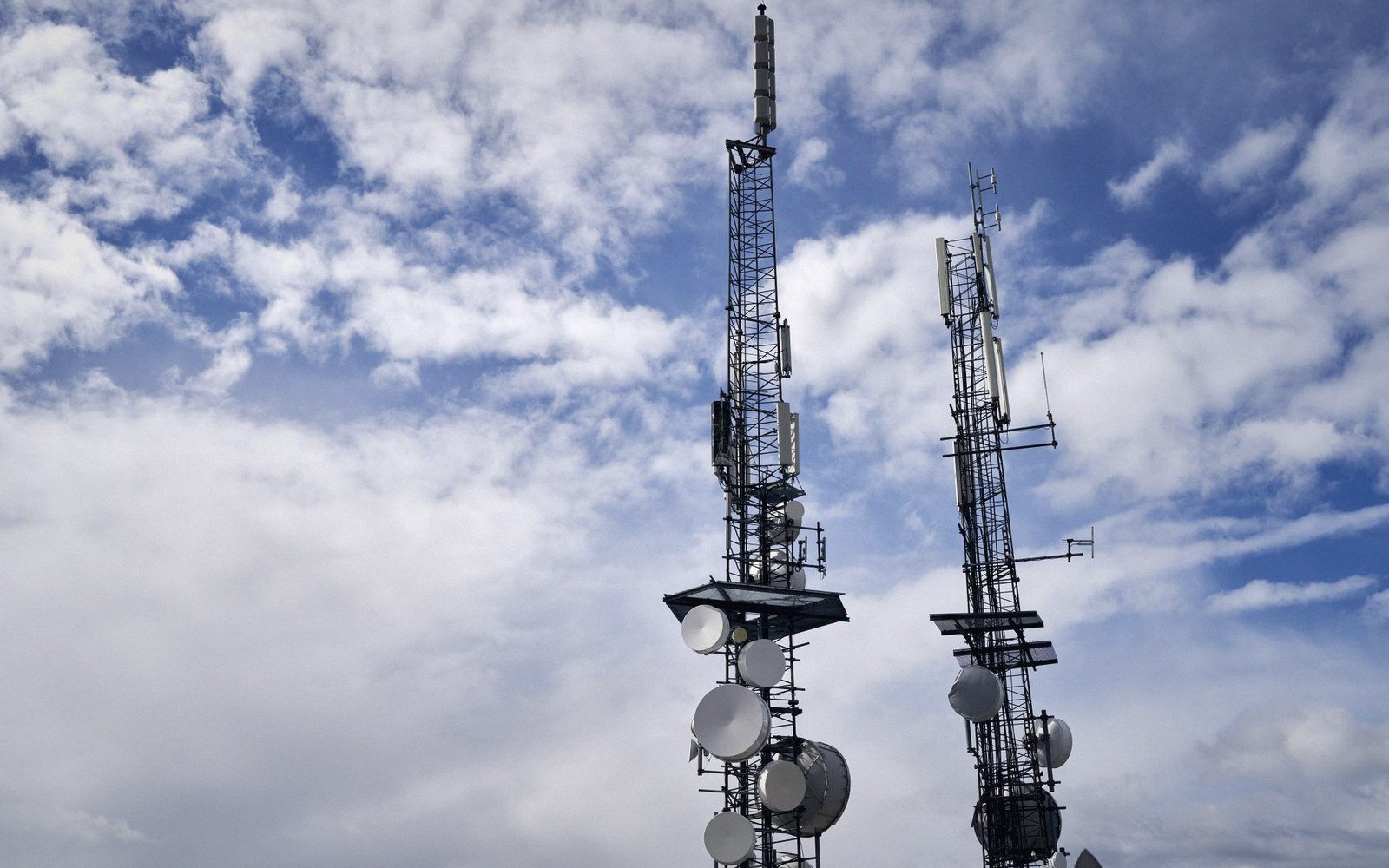
The deliberately quiet direction, and how deep a null can actually be held in practice
A directional antenna array is designed to protect something: a co-channel station in a neighbouring city, a national park whose trustees objected to interference, a clear-channel frequency that must stay useful at long range. The protection is achieved not by pointing signal toward it but by pointing a null at it. The null is the array's sharpest instrument, and understanding how deep it can really go — and how reliably — is the honest engineer's first job.
Nulls arise from cancellation. When two or more towers are fed with carefully chosen amplitudes and phases, their fields subtract at certain azimuths. On paper, with perfect components and perfectly matched soil, the subtraction can be total: field strength falls to zero. In reality, it never does, because real transmitting equipment carries tolerances, ground conductivity is not uniform in every direction, and the towers themselves are not ideally isolated from nearby structures. In practice, a null is a significant reduction in field strength relative to the non-directional reference, rather than a true zero. Even a nominal null that achieves only a 25 dB reduction represents a field strength one-eighteenth of what would otherwise exist at that azimuth, which is, practically speaking, a very quiet direction.
The depth of a null is also sensitive to frequency stability and to the health of the phasor cabinet that sets the amplitude and phase ratios between towers. A shift of a few degrees in the phase of one element can lift a deep null by 10 dB or more; this is why a directional array must be re-proofed after any significant work on its feed system. Engineers call this null-fill: unintended energy creeping back into the protected direction.
Null depth also degrades with distance from the array. Close in, the geometry of the individual tower fields still dominates. At greater distances, the ground wave averages out fine spatial variations in conductivity, and skywave arriving from a different elevation angle entirely can bypass the pattern. A station that protects its neighbour by ground wave has less control over what its skywave does at night — which is why nighttime directional patterns are often tighter and more complex than daytime ones.
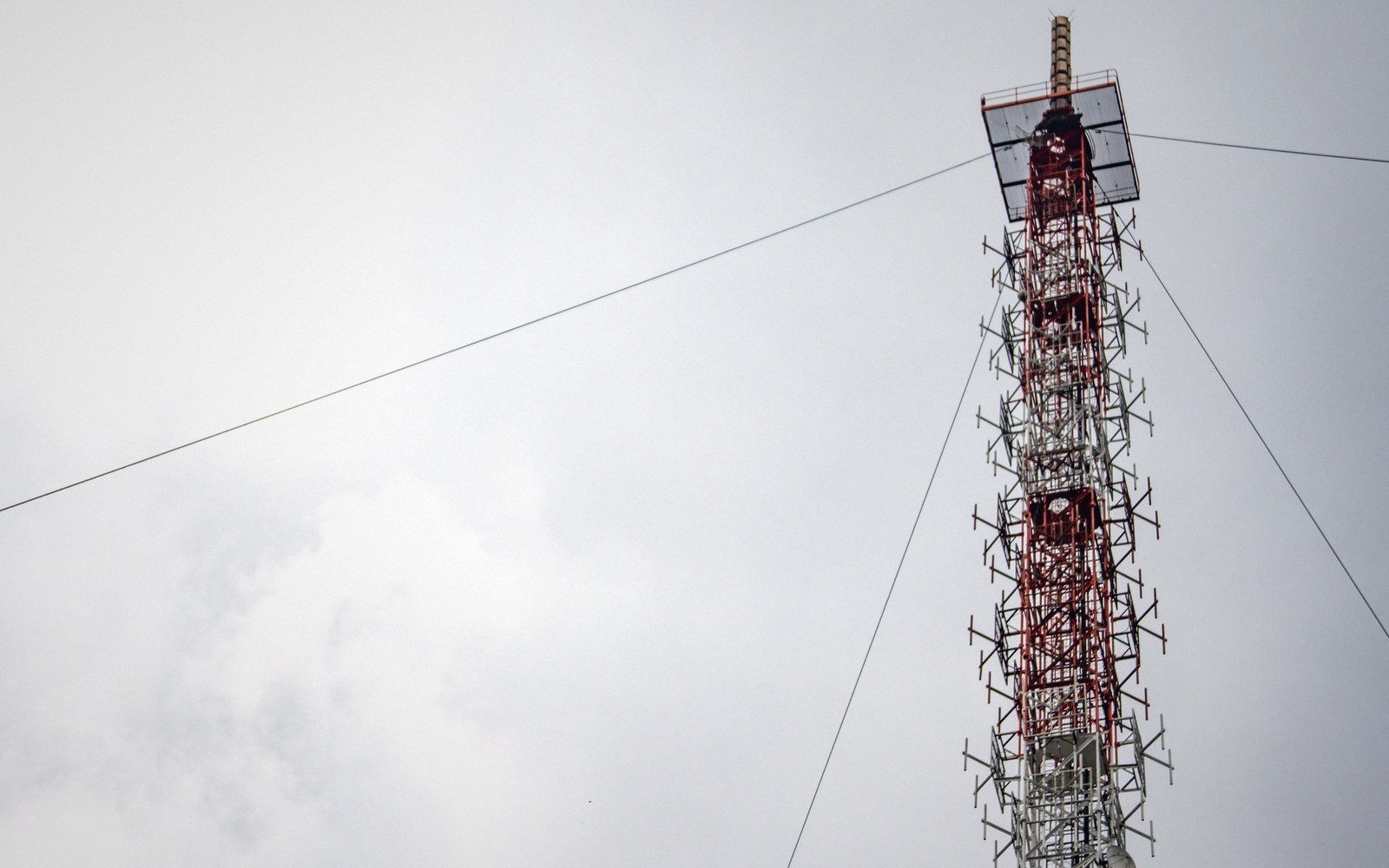
The practical lesson is that a null is a balance, not a wall. It is maintained by correct feed ratios, a good ground system, and periodic measurement. Let any one element drift, and the quiet direction wakes up.